I should like to say thank you so much to Rich and the team at Building Energy Experts for their efficiency and helpfulness in completing our commercial EPC survey in record time.
Margarita Hamilton, Walton Castle – Commercial EPC
Assessing a historic property like Walton Castle requires real expertise, and your team delivered exactly that. Not only did they complete this survey with a very quick turnaround but they went above and beyond by providing extra information and guidance which has been extremely helpful.
We are delighted with the final result and once again thank you from both myself and the team at Walton Castle.
Protect your asset value, manage portfolio risk and ensure MEES compliance with an expert Commercial EPC assessment.
Commercial landlords already can’t legally let a building rated EPC F or G under the current Minimum Energy Efficiency Standards (MEES) minimum of E, with non-compliance penalties running up to £150,000 per breach, based on rateable value. That bar is rising further: under DESNZ’s confirmed interim response, non-domestic buildings over 1,000m² are on track for a target EPC B by 2031 “where cost effective” – smaller premises under 1,000m² stay at the current E minimum for now, with no new deadline.
We provide technically precise, evidence-backed commercial EPCs that reflect the true energy performance of your buildings. Rather than relying on standard software assumptions that often penalise older or complex properties, our team focuses on thorough data collection to secure the most accurate rating possible.
Whatever stage you’re at, our Commercial EPC service covers three distinct needs: Transactional Commercial EPCs, a straightforward, efficient assessment for an active sale, new lease or renewal; Predictive MEES Modelling, SBEM-based modelling of proposed works before capital is committed, to verify a targeted rating is achievable ahead of the 2031 EPC B trajectory; and Mitigating Software Defaults, replacing punitive default assumptions with real building data, often improving a rating by a band or two without physical works. Please see our FAQs below for more information.
Why work with us?
Experience
Our commercial EPC methodology has been proven across the built environment – from replacing default air permeability assumptions with real air test data to take two Bristol warehouses from a failing F and a high B to full MEES compliance and an A, to switching a Grade II listed Somerset venue, Walton Castle, from an outdated residential assessment basis to the correct commercial methodology, lifting its rating from a failing F (30) to a D (94) without a single physical intervention.
Award-winning
Winner, Consultancy – 2025 Bristol Property Awards
Winner, Supply Chain Partner of the Year – 2025 Unlock Net Zero Awards.
Winner, Retrofit Assessor of the Year – 2023 Retrofit Academy Awards.
Highly Commended, Employer of the Year – 2023 Retrofit Academy Awards.
Speed
Project deadlines matter. We manage all data collection, modelling and reporting in-house – keeping your project moving without administrative delays.
We work to a standard two-week turnaround, with the majority of reports and certificates delivered well within that window.
Pricing
Cost depends on the scale and complexity of the project – from a single property to a large-scale portfolio.
Our rate card is reviewed regularly, so we’re confident you won’t find better value elsewhere. If you’ve found a lower quote for comparable work, let us know – we’ll match or beat it.
Support
Energy efficiency, decarbonisation and building regulation can be genuinely complex.
We’ve worked hard to explain a range of topics related to commercial decarbonisation in plain English, so non-experts get the information they need.
Get Your Commercial EPC Quote Today
Looking for a fast and reliable commercial EPC in Bristol or nationwide?
Contact us today for a free quote and to discuss your specific project requirements.
Dragonfly Power (a not-for-profit community energy group) work with local businesses, schools and other community organisations to increase the uptake of renewable energy. We appointed Building Energy Experts to do a number of energy assessments for local community halls. Their reports were thorough and they were structured in such a way that the hall owners could see the “cheap wins” and which measures would take more investment. Furthermore, the reports have formed the basis for a number of successful grant applications for the refurbishment of the buildings including the installation of solar panels, batteries and heat pumps. This has been a very successful arrangement and we look forward to working with BEE in the future.
Anton Page, Dragonfly Power – Commercial Energy Surveys & Commercial EPCs
The service you provided was very helpful in informing our understanding of the building and the design stage, with good communication and availability for follow-up queries following receipt of your report.
Hilary Kolinsky, Studio Skein – PAS 2038 Assessment, Testing & Commercial EPC
Thoughtful, fast-growing force in sustainable consultancy harnessing analytical theory to deliver multiple projects. Rightly gaining national recognition.
Judges, Bristol Property Awards 2025
Understanding Commercial EPCs: Your Questions Answered
We’ve compiled answers to the most common questions about Commercial EPCs to help you understand this energy performance tool.
What is a Commercial EPC?
A Commercial Energy Performance Certificate (EPC) is a legally required asset-rating document that profiles the energy efficiency of a non-domestic building on a scale from ‘A’ (most efficient) to ‘G’ (least efficient).
Unlike domestic EPCs, which are calculated based on projected household fuel costs, commercial EPC ratings are driven entirely by calculated carbon dioxide CO² emissions per square metre. Every certificate includes an accompanying Recommendation Report detailing standard, statutory pathways to improve the property’s asset performance.
What Commercial EPC services do you offer?
1. Transactional Commercial EPCs
An efficient, compliant assessment service tailored for active property sales, new leases and renewals. We focus on clear communication and accurate reporting to ensure your documentation is lodged correctly, preventing administrative delays from stalling your legal completion.
2. Predictive MEES Modelling
Designed for forward planning within the SBEM software environment. We virtually model proposed fabric upgrades, fit-out designs or HVAC replacements before capital works begin. This allows you to verify that your post-refurbishment works will achieve your targeted rating (such as an EPC ‘B’) before investing in physical installation.
3. Mitigating Software Defaults
A targeted service engineered to overcome the software’s default assumptions. By locating historical building records and utilising physical diagnostic tools – such as air permeability testing – we replace punitive system defaults with real-world data. This approach frequently improves an asset’s rating by one or two bands without requiring expensive structural renovations.
When am I legally required to commission a Commercial EPC?
By law, a valid Commercial EPC must be commissioned before a commercial asset is formally marketed for sale or lease. You require a certificate if you are selling a non-domestic property, granting a new lease, renewing an active commercial tenancy or completing construction on a new commercial development.
What are the current MEES rules and non-compliance penalties?
Under current Minimum Energy Efficiency Standards (MEES), it is unlawful to grant a new commercial lease or continue an existing lease if your property holds an EPC rating of ‘F’ or ‘G’ (unless a valid, registered exemption applies).
The financial penalties for non-compliance are severe: local authorities can levy public infringement notices and fines of up to 12% of the property’s rateable value, with a minimum penalty of £10,000 and a maximum cap of £150,000 per breach. With regulations driving the commercial built environment toward a mandatory target of EPC ‘B’ by 2030, proactive asset management is essential to protect portfolios from premature depreciation.
How does a Commercial EPC differ from a Commercial Energy Survey?
The distinction comes down to asset compliance versus operational reality:
– A Commercial EPC is a statutory asset rating based on a standardised building model (SBEM). It evaluates the inherent potential of the building’s fabric and fixed services to rank its carbon emissions. It is a mandatory transactional requirement to satisfy MEES regulations.
– A Commercial Energy Survey looks at actual operational behaviour. It analyses real-world utility bills, occupant habits and equipment performance to identify operational waste and calculate precise financial ROI and payback periods for physical energy-saving measures.
If you need a certificate to legally rent or sell a building, you require a Commercial EPC. If you want to cut your monthly energy bills or optimise an inefficient heating plant, you require a Commercial Energy Survey.
What is the ‘default data trap’? How does it affect asset value?
When an energy assessor cannot easily verify the exact insulation thickness or the specific efficiency values of older building services, the government-approved SBEM software forces them to select “punitive default values.”
These defaults assume a worst-case scenario, which frequently downgrades an otherwise compliant building into an ‘F’ or ‘G’ band. This triggers artificial compliance issues and risks substantial fines. We eliminate this issue through thorough on-site inspections, sourcing historical technical records, and using physical testing – such as air permeability testing – to replace harsh software assumptions with actual data.
How can I improve my rating?
Improvements to a commercial EPC rating generally fall into two categories: data rectification within the software model, and physical building upgrades. Because the asset rating is driven strictly by calculated carbon emissions, the most cost-effective first step is always ensuring the SBEM model reflects reality.
– Data Rectification: Replacing the software’s worst-case default assumptions by sourcing original building specifications, operation and maintenance (O&M) manuals, or commissioning an air tightness test. Proving a better air permeability score or exact insulation thickness regularly lifts a building by one or two bands without physical works.
– Lighting Upgrades: Replacing old lamps with high-efficiency LEDs and adding automated controls – such as presence detection and daylight dimming – is typically the most straightforward physical intervention with the highest impact on a commercial asset score.
– Heating and Ventilation: Upgrading inefficient systems or switching away from carbon-intensive fuels (such as heating oil or older gas boilers) to low-carbon technologies like heat pumps significantly lowers the modelled CO² emissions, improving the final EPC band.
– Fabric Improvements: Improving insulation layers or upgrading to high-performance glazing reduces the calculated heating and cooling demand within the SBEM software.
Are listed, traditional or historic commercial buildings exempt from EPCs?
No. Historic or listed status does not grant an automatic, blanket exemption from having an EPC. An exemption only applies if compliance with minimum energy standards would unacceptably alter the building’s character or appearance. To legally establish this, a baseline Commercial EPC must still be modelled by a qualified assessor who understands traditional, vapour-permeable building fabrics. We routinely deliver highly sensitive non-domestic assessments for historic castled structures, heritage estates and traditional solid-stone commercial assets.
What do you need from us to get started?
To provide an accurate commercial quote, any existing building documentation is highly valuable – including architectural floor plans, building service manuals, O&M files or previous EPC data. If no historical documentation exists, our team can collect all necessary structural and services data during our detailed on-site inspection.
Need Commercial EPC Services?
Our friendly team is ready to provide expert advice for your project. Whether you need a free consultation to discuss your options or a competitive quote for our commercial EPC services, we’re here to help.


Related Content

Bristol Warehouses: An Evidence-Based Path to MEES Compliance
View Case Study
Walton Castle: From a Failing EPC F to a Compliant D
View Case Study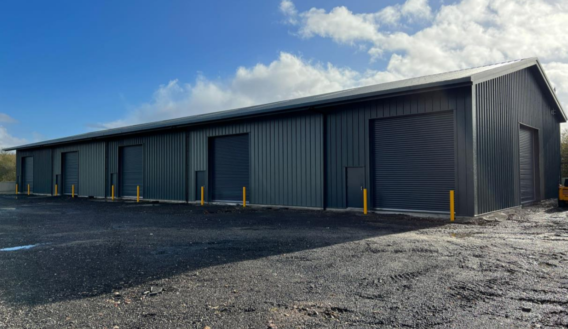
Winkleigh Airfield: An EPC A for an Unconditioned Industrial Shell
View Case StudyDec 22nd, 2022

MEES Regs Explained: EPC Rules for Landlords
Read ArticleFeb 27th, 2023

Commercial EPC: What is it and Do You Need One?
Read ArticleJun 12th, 2023

How to Improve Your Commercial EPC Rating
Read ArticleMar 8th, 2024

Air Tightness Test Results & EPC Rating
Read ArticleDec 9th, 2024

Commercial Energy Assessor: What Do They Do?
Read ArticleMar 10th, 2026

EPC Reform Confirmed: EPC Changes 2026
Read ArticleSep 28th, 2026