
The sixth round of the Bristol City Leap Community Energy Fund is now open 🎉 – offering grants, microgrants and, with greater flexibility than before for capital costs, zero-interest loans for decarbonisation projects. Applications close 23rd September 2026.
Bristol City Leap Community Energy Fund: Evidence in Practice
The Bristol City Leap Community Energy Fund exists to help Bristol’s community organisations, charities and co-operatives move decarbonisation plans for the buildings they own or occupy from ambition to delivery – but a strong application, and a well-spent grant, both depend on knowing what a building actually needs before committing to a route. That’s where the right technical evidence comes in.
We’ve already carried out work for three very different Bristol organisations funded through past rounds: a housing co-operative weighing up district heat network connection, a Grade I listed Georgian church needing precise diagnostics for a heating replacement, and a much-loved city farm working out what to retrofit and what to rebuild. Each came to us with a different question and a different building type, but all three needed the same thing before any decision could be made: real, evidenced data rather than assumption. Here’s what each of them needed, and how the right technical evidence made the difference.
1. Somewhere Co-operative Housing Association: Bristol Heat Network Feasibility
Somewhere Co-operative Housing Association (SCHA) wanted to understand the best decarbonisation route for its 14-property portfolio in Bedminster – specifically, whether connecting to the emerging Bristol Heat Network, operated by Vattenfall, made more sense than installing individual air source heat pumps property by property. The question was more than theoretical: Vattenfall’s network pipework is being laid directly through Bedminster, with the future energy centre for that quadrant of the network due to sit close to part of SCHA’s own housing stock.
SCHA identified four Victorian terraced properties as a representative sample; within the project’s budget, we assessed two of these in detail – enough to establish a reliable baseline while keeping the study cost-effective. Alongside modelling both today’s grid factors and the network’s projected future fuel mix, we compared the community network model against individual heat pumps on cost and practicality.
2. Churches Conservation Trust, St Paul’s Church: Right-Sizing a Heating Strategy Without Invasive Testing
St Paul’s Church, Portland Square – known locally as the “wedding cake” church for its tiered Georgian architecture, and home to Circomedia’s circus and physical theatre school – was relying on two end-of-life gas boilers. The Churches Conservation Trust needed diagnostic evidence to underpin a heating feasibility study, against a tight 10-day funder deadline. The original brief called for invasive smoke testing to trace air movement through the building – a method that risked leaving residue on the historic stone and timber fabric.
We proposed a non-invasive alternative instead, working around Circomedia’s daily use of the building to deliver the diagnostic evidence the Trust needed within the funder’s deadline.

Churches Conservation Trust, St Paul’s Church: Right-Sizing a Heating Strategy Without Invasive Testing
View Case Study3. St Werburghs City Farm: From Diagnostics to a Low Carbon Technology Strategy
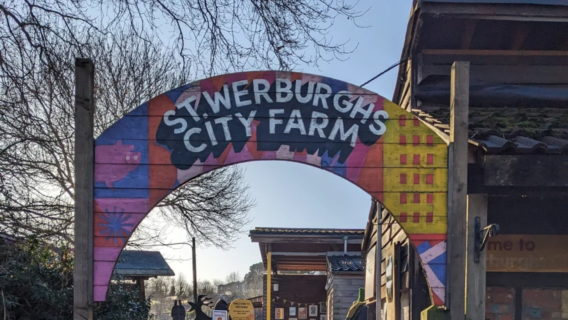
For over four decades, St Werburghs City Farm has been a vital piece of social infrastructure for Bristol – supporting adults experiencing mental ill-health, social isolation and complex learning disabilities, as well as children who need an alternative to mainstream education. Before any decisions could be made about the future of its buildings, the Farm needed a genuine, evidenced understanding of their actual condition and performance, with diagnostics feeding into Askew Cavanna Architects’ wider masterplan for the site.
Why Bristol City Leap Projects Need This Evidence
Different building types, different organisations, different questions – but the same underlying principle running through all three: decisions about decarbonisation are only as good as the evidence behind them. A heat network connection, a heritage-sensitive heating replacement, and a phased retrofit strategy all depend on knowing what’s actually happening in a building, not what’s assumed to be happening. That’s exactly the kind of technical evidence base the Bristol City Leap Community Energy Fund is designed to help organisations access.
We carry out the technical assessment, testing and feasibility work that help Bristol City Leap-funded projects move forward. If your organisation is considering an application to the sixth round – open now, closing 23rd September 2026 – get in touch.