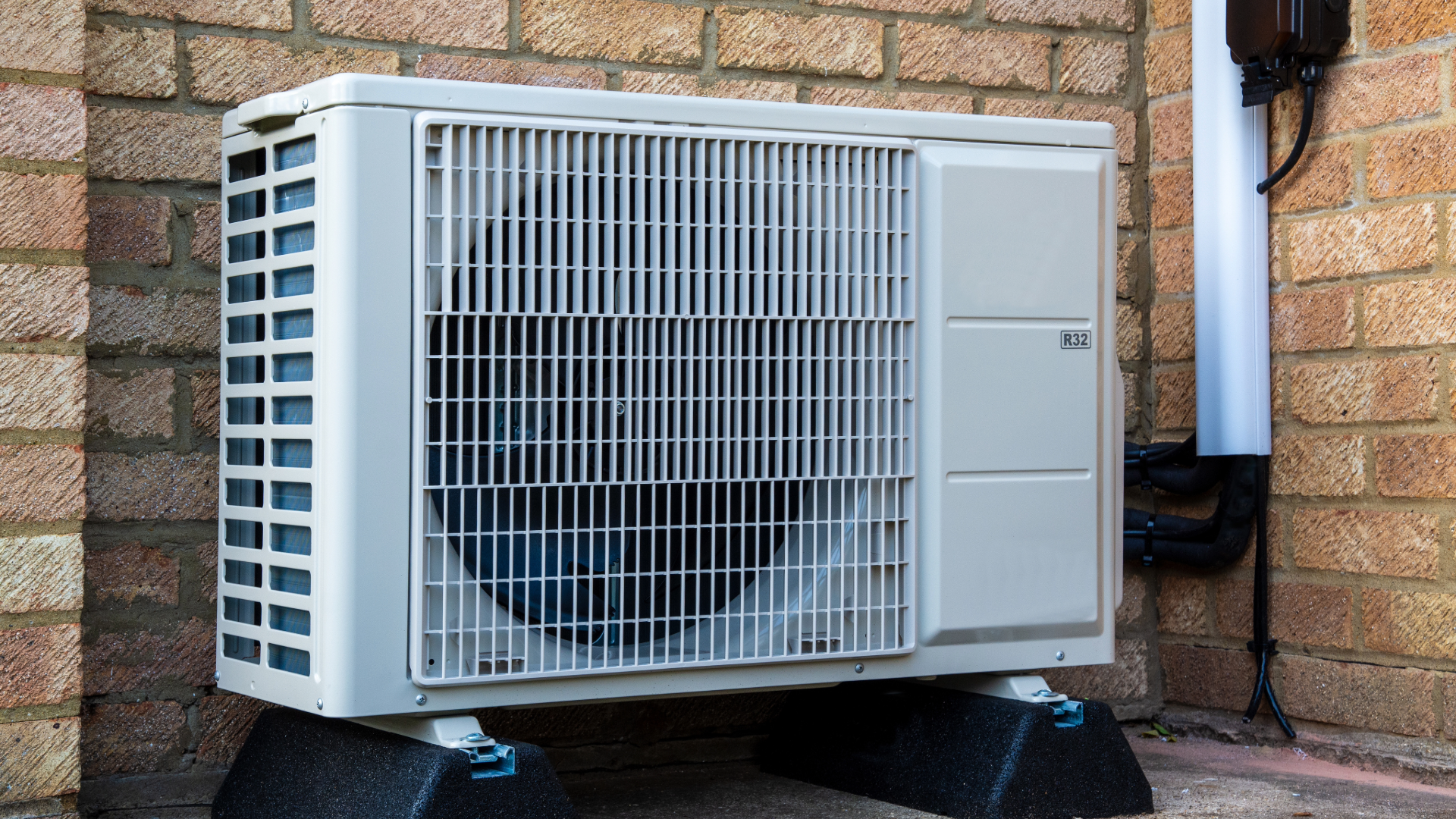

“ASHP” gets thrown around as shorthand for almost any low-carbon heating system, which makes it easy to lose track of what an air source heat pump actually is and how it works. It isn’t a boiler with a different fuel source – it works on a fundamentally different principle and understanding that principle is what makes the difference between a heat pump that runs efficiently and one that doesn’t.
In this blog you’ll learn:
- What an air source heat pump actually is
- How it works, step by step
- How it differs from a gas boiler
- Whether it will genuinely cut your running costs
What Is an Air Source Heat Pump?
Most UK heating systems either burn fuel, like a gas boiler or convert electricity directly into heat. An air source heat pump (ASHP) does neither. Instead, it moves existing heat energy from the outside air into your home (Energy Saving Trust Air Source Heat Pump Guidance), using electricity to power that process rather than to generate heat directly. Because it’s moving heat rather than creating it, an ASHP typically delivers more heat energy than the electrical energy it consumes – which is why, run correctly, it usually costs less to operate than a traditional heating system.
How Does an Air Source Heat Pump Work?
The simplest way to picture how an ASHP works is as a fridge running in reverse:
- Outside air is drawn across a network of tubes filled with refrigerant. Even air as cold as -20°C carries enough heat energy to warm the refrigerant, turning it from a liquid into a gas.
- The gas passes through a compressor, which increases its pressure. Compression also adds heat to the gas – the same effect that warms an air hose when you top up a tyre.
- The now hot, compressed gas passes into a heat exchanger surrounded by cooler air or water. The refrigerant transfers its heat into this air or water, warming it.
- That warmed air or water circulates around your home via radiators or underfloor heating, providing space heating and hot water.
- The refrigerant condenses back into a cool liquid, and the cycle starts again.
Air Source Heat Pump vs Gas Boiler: What’s Different
The practical difference that matters most is temperature. A gas boiler heats water to a high flow temperature quickly; an ASHP works most efficiently at a lower, steadier flow temperature over a longer period. That’s why heat pumps are often paired with underfloor heating or larger radiators – they’re sized to deliver comfortable heat at the lower temperatures a heat pump runs best at, rather than the higher temperatures a boiler and standard radiators are designed around.
It also means an ASHP depends more on the building around it. A boiler can compensate for a draughty, poorly insulated home simply by running hotter; an ASHP has less room to do that before efficiency drops and running costs rise.
Will an ASHP Actually Cut Your Bills?
This is where the answer genuinely depends on the building, not just the technology. Installed into a well-insulated, reasonably airtight home, an ASHP can meaningfully cut both bills and carbon. Installed into a leaky home that’s still losing heat quickly through poor fabric, the same heat pump has to work harder to compensate – and can end up costing more to run than the system it replaced.
For a full breakdown of whether your specific home is ready for one, see our companion guide, Is My Home Suitable for an Air Source Heat Pump? And for how an ASHP fits alongside solar PV, heat networks and fabric measures as part of a wider strategy, see Sustainable Ways to Heat Your Home.
What’s Next?
An air source heat pump is a genuinely effective piece of technology – but how well it performs depends on the building it’s installed in, not just the unit itself.
Get in touch if you’d like to find out whether your home is ready for one.