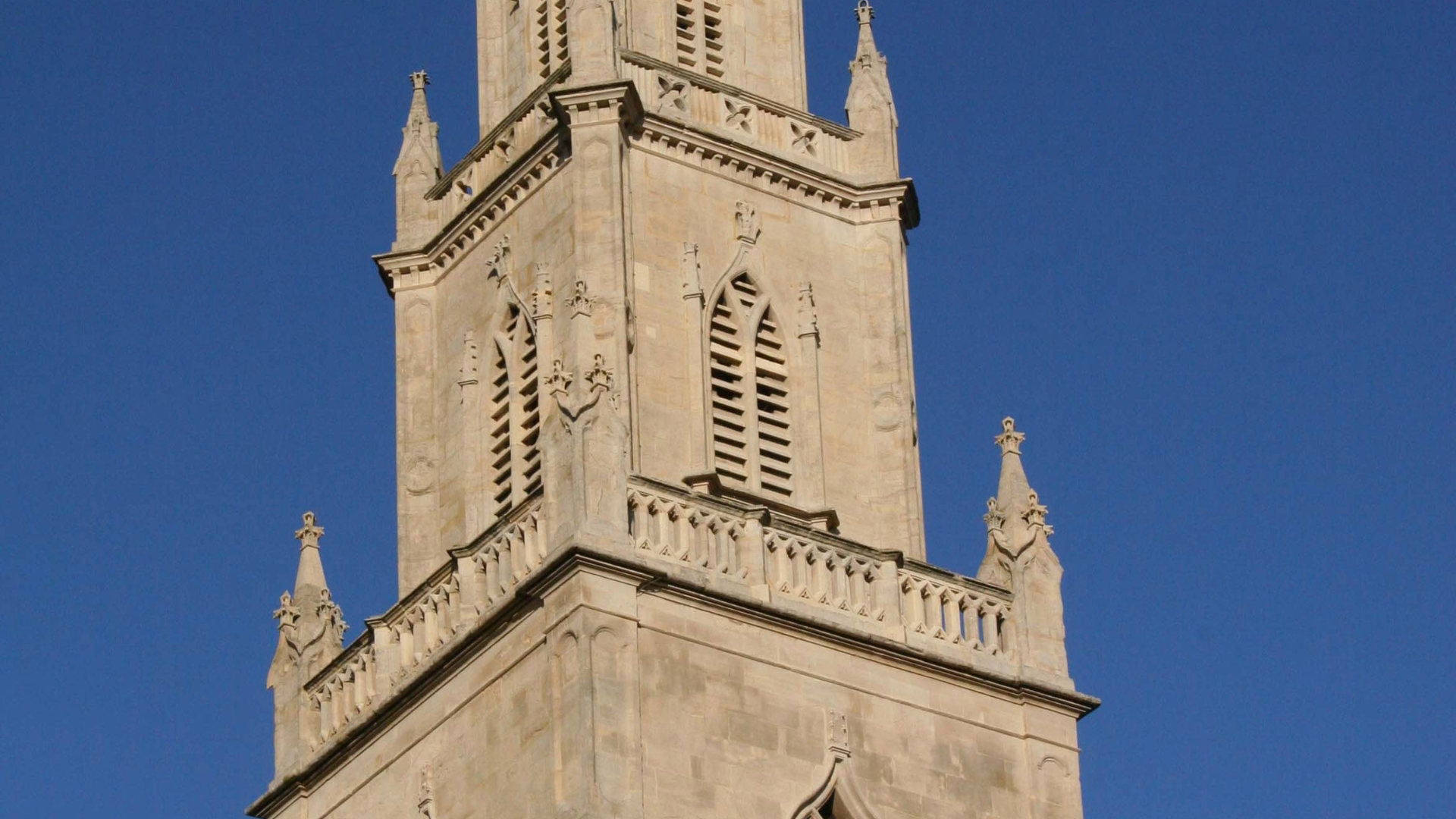
Delivering non-invasive thermographic and air tightness diagnostics to underpin a heating feasibility study for a Georgian “wedding cake” church.
Project Overview
- Client: The Churches Conservation Trust (commissioned via Greener Energy Futures)
- Sector: Charity & Community Organisations | Heritage & Listed Buildings
- Location: Portland Square, Bristol
- Services Provided: Thermographic Survey, Air Tightness Testing
- Scale: Grade I listed Georgian church, home to Circomedia (circus and physical theatre school)
- Target: Diagnostic baseline to underpin a heating feasibility appraisal, within a 10-day funder deadline – funded by the Bristol City Leap Community Energy Fund
The Challenge
St Paul’s Church, Portland Square – known locally as the “wedding cake” church for its tiered Georgian architecture, and home to Circomedia’s circus and physical theatre school – was relying on two inefficient, end-of-life gas boilers. The Churches Conservation Trust needed diagnostic evidence to underpin a heating feasibility study, against a tight 10-day funder deadline. The brief also called for invasive smoke testing to trace air movement through the building – a method that risked leaving residue on the historic stone and timber fabric.
The Solution
Non-Invasive Thermography & Depressurisation Air Testing
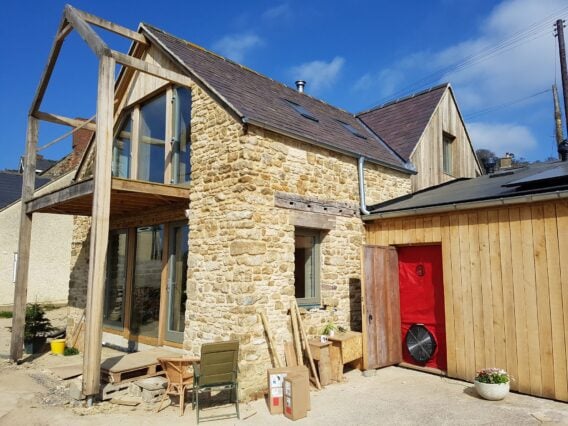
We coordinated early-morning mobilisations to work around Circomedia’s use of the building, capturing high-resolution thermography alongside multi-fan air tightness testing with depressurisation. Using blower doors to deliberately exaggerate air infiltration pathways for the thermal camera, we achieved the same visibility into air movement the original smoke-test approach was meant to provide – without any risk to the historic fabric, and without disrupting the building’s daily use.
The Outcome
The test established a precise air permeability baseline of 6.72 m³/h·m²@50Pa – surprisingly tight for a Grade I listed church of this age. Rather than a vague sense that the building was “draughty,” the combined thermography and air testing pinpointed exact infiltration pathways, including gaps around every window frame and fractured historic stonework. That precision matters well beyond the immediate diagnosis: it protects the Trust from over-sizing heating systems based on worst-case heritage assumptions. With the building’s true heat loss physically quantified rather than assumed, the Trust now has the evidence to right-size a replacement low-carbon heating strategy – avoiding unnecessary capital spend and inefficient running costs down the line.
Client Testimonial
With a 10-day deadline for our Bristol City Leap funding application, we needed testing that was both fast and wouldn’t disrupt St Paul’s Church or put the historic fabric at risk, as it’s Grade I listed and in daily use. Building Energy Experts’ non-invasive thermography and air testing gave us a precise diagnostic baseline, rather than assumptions, to inform our renewable heating strategy – meaning we can now choose a replacement system that’s the right fit for the building with confidence and without unnecessary cost.
— Meriel O’Dowd, Conservation Projects Manager, The Churches Conservation Trust

