“Retrofit” often gets treated as one thing, but the route to an energy efficient commercial building usually runs through three quite different stages – and starting at the wrong one wastes both money and disruption. Knowing which stage you actually need first is often the difference between a quick, low-cost win and an expensive project that didn’t need to happen yet.
In this blog you’ll learn:
- What building optimisation, light retrofit and deep retrofit each actually involve
- The savings each stage can realistically deliver
- Why sequencing deep retrofit against your maintenance cycle matters
- A practical framework for deciding where to start
The Three Stages Toward an Energy Efficient Commercial Building
Getting to a genuinely energy efficient commercial building isn’t a single project – it’s usually three distinct stages, each with a different cost, disruption level and realistic savings ceiling.
1. Building optimisation
Correcting wrong set points, faulty sensors and poorly tuned systems, without any physical changes to the building at all. It’s almost always the right place to start, since it costs nothing beyond the audit itself.
2. Light retrofit
New building management systems and controls, pipework insulation, lighting upgrades, efficient equipment replacements and non-disruptive fabric measures. This can typically be carried out without disrupting normal building operation.
3. Deep retrofit
New façades, windows and doors, roof and floor insulation. This is usually necessary for older buildings with genuinely uninsulated fabric, but it’s disruptive, capital-intensive and worth planning carefully rather than rushing into.
What Energy Savings Look Like at Each Stage
Optimisation alone can deliver savings of up to 26% – a striking figure given it involves no physical works at all. Combined with light retrofit, that figure can reach up to 37%, with a strong enough return on investment that both are usually worth doing as soon as possible, well ahead of any decision about deep retrofit.
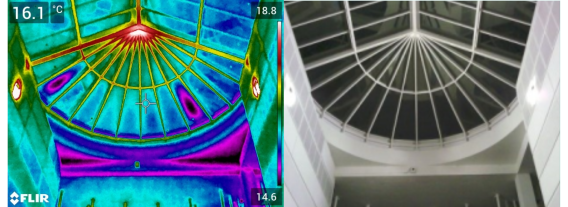
Our thermographic survey on The Marlowes Shopping Centre’s is a good illustration of how this plays out in practice: rather than treating every fabric issue the same way, the survey separated low-cost, high-impact maintenance (resealing door and window frames) from the capital works genuinely needed on insulation and thermal bridging – giving the client a schedule that tackled the cheap wins immediately while planning the bigger spend deliberately.
Sequencing Deep Retrofit Against Your Maintenance Cycle
Deep retrofit is best planned around your existing repairs and maintenance schedule, not treated as a separate project. If a roof needs replacing anyway, that’s the moment to specify insulation and a PV array – not a future retrofit programme bolted on afterwards.
Horfield Health Centre is a clear example of this logic in action: rather than replacing an ageing gas boiler with an unaffordable like-for-like heat pump swap, the retrofit plan sequenced fabric improvements first, positioning the building so that when the heating system does eventually need replacing, a heat pump becomes viable without the full cost of the original quote.

A Practical Framework for an Energy Efficient Commercial Building
The UK Green Building Council’s net zero commercial guide sets out a useful order to work through: understand how the building currently uses energy, identify what’s actually needed through a proper condition check, build the business case around regulation and cost, understand roadblocks like the split incentive between landlords and tenants, set trackable goals, optimise existing systems before upgrading anything, then upgrade heating, cooling, lighting and fabric – monitoring continuously afterwards to confirm the savings actually landed.
For the full picture – the regulatory drivers behind all this, the financial case for acting now, and the Horfield Health Centre sequencing decision in full (including the real cost figures that made a straight heat pump swap unaffordable, and the 15-year phased plan that got around it) – watch our Commercial Decarbonisation webinar, delivered for London Climate Action Week 2025:

What’s Next?
Whether you’re starting from scratch or already partway through a retrofit programme, getting the sequencing right is what turns a series of improvements into a genuinely efficient building.

We carry out Commercial Energy Surveys to identify where your building actually sits across optimisation, light retrofit and deep retrofit priorities.