Delivering precision thermal imaging evidence to target an EPC C-to-B uplift for a live retail centre.
Project Overview
- Client: UEC Energy (comissioned on behalf of The Marlowes Shopping Centre)
- Sector: Commercial & Industrial
- Location: Hemel Hempstead, Hertfordshire
- Services Provided: BREEAM Compliant Thermographic Survey, Building Fabric Analysis
- Scale: Large active shopping mall – retail units, offices and glazed atria
- Target: EPC C to B uplift
The Challenge
The Marlowes Shopping Centre was operating at an EPC C, and UEC Energy needed a decarbonisation strategy to close the gap to a B rating – but first they needed to know exactly where the building was losing heat. This was no vacant asset: the centre remained fully trading throughout, ruling out the controlled conditions that standard surveys rely on. Add a complex glazed atrium roof into the mix, and the site presented two compounding problems – how to gather clean data in a live, thermally “noisy” environment, and how to interpret it once external variables like cold sky radiation were in play. UEC Energy needed more than a diagnosis: a prioritised, evidence-backed schedule of interventions that would let them target their retrofit budget with confidence and build the case for an EPC B.
The Solution
Thermographic Survey & Fabric Analysis
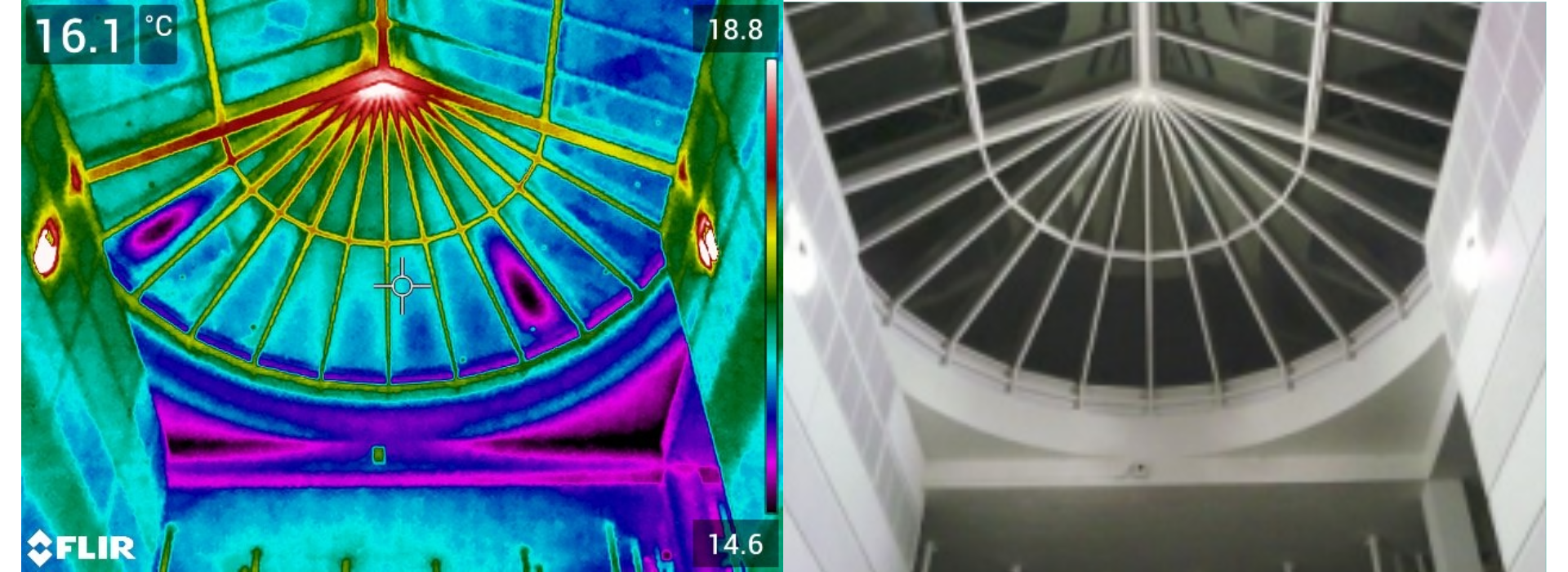
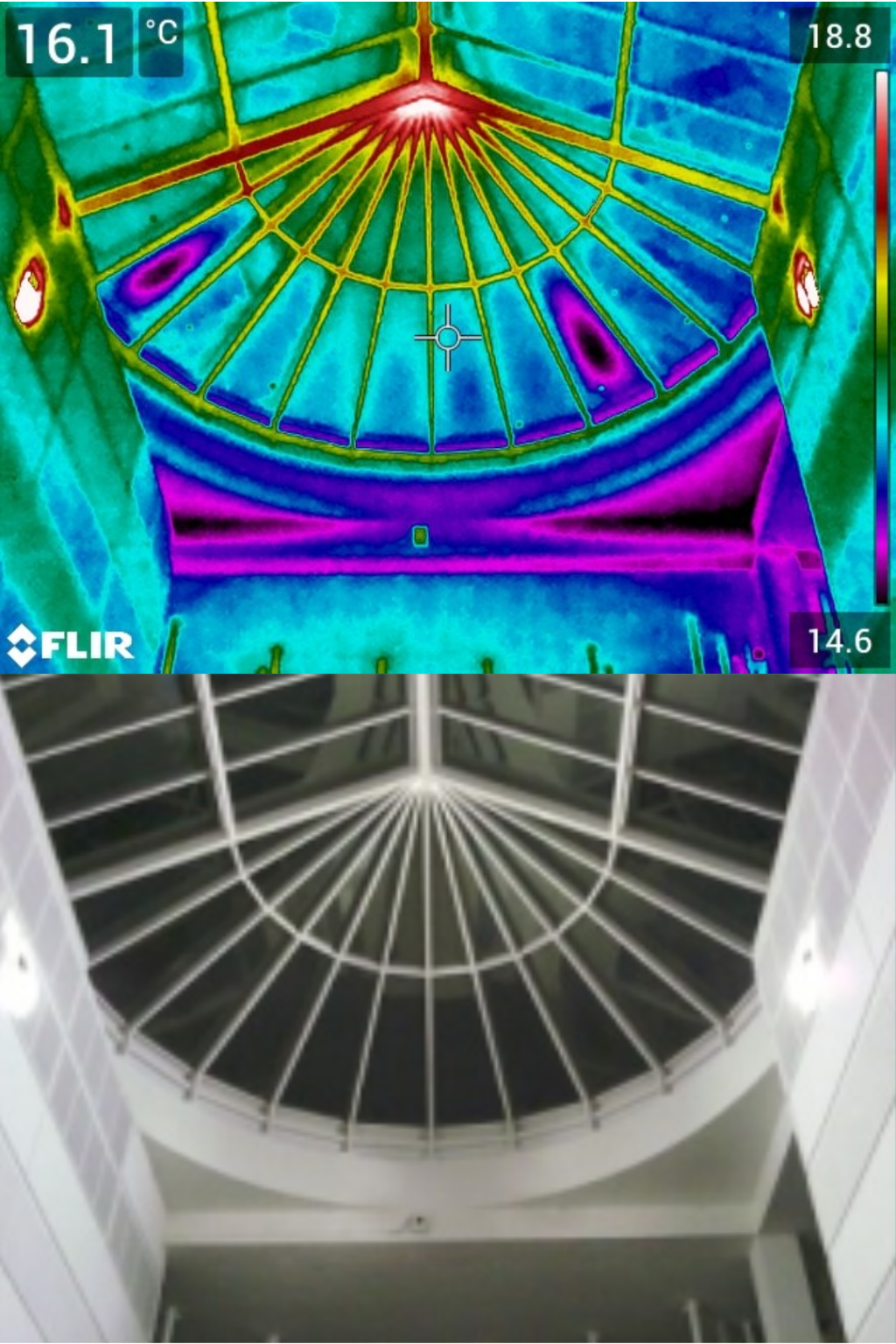
We carried out a BREEAM-compliant thermographic survey using a FLIR E76 thermal camera, timed overnight to eliminate solar loading and secure a reliable internal/external temperature differential. The imaging isolated genuine fabric defects from the noise of an active site: heat loss concentrated around door and window seals (rather than the glazing itself), significant thermal bridging at steel structural beams, corner junctions and intermediate floor zones, and cold spots suggesting voids or settling within the wall insulation. A cold patch on the roof above the management suite also flagged a likely water ingress risk ahead of any visible internal damage. Rather than treating every anomaly at face value, our thermographer applied specialist interpretation to filter out transient effects from cycling doors, active lighting and cold sky radiation – ensuring the client received a genuinely actionable dataset, not a list of false positives.
The Outcome
The survey produced a clear, prioritised schedule of fabric interventions – separating low-cost, high-impact maintenance (resealing door and window frames) from the capital works needed on insulation and thermal bridging – giving UEC Energy the technical evidence to support their roadmap to an EPC B. By working within the constraints of a live retail environment rather than requiring disruptive closures, we delivered a survey that reflected real operating conditions while still producing defensible, standards-compliant evidence. Targeting retrofit spend at the interventions that matter most also caught a moisture issue early enough to prevent more costly structural damage down the line.
Client Testimonial
Surveying an active shopping centre is logistically complex, but Building Energy Experts handled it with precision. Their report cut through the environmental variables to provide a clear distinction between maintenance quick-wins, like resealing doors, and the capital investment needed for insulation. It provided the exact technical evidence required to inform our roadmap to an EPC B rating and justify the retrofit budget.
— Philip Emsley, UEC Energy
