Delivering PAS 2035 retrofit assessment, coordination and design across a dispersed portfolio, balancing heritage protection with the realities of a vulnerable-occupant, multi-tenant estate.
Project Overview
- Client: Bell Group (commissioned on behalf of St Mungo’s)
- Sector: Social Housing & Housing Associations | Heritage & Listed Buildings
- Location: Bristol and London (Islington, Camden, Brent, Hackney, Haringey, Hounslow, Kensington & Chelsea and the City of London)
- Services Provided: PAS 2035 Retrofit Assessment, Coordination & Design; Heritage Impact Statements and Listed Building Consent support
- Scale: 300 units across Bristol and London – 141 rooms/bedspaces across 18 HMOs, and 159 self-contained flats/bedsits across 23 blocks
- Target: EPC C targeted across the portfolio, with EPC A pursued where feasible
The Challenge
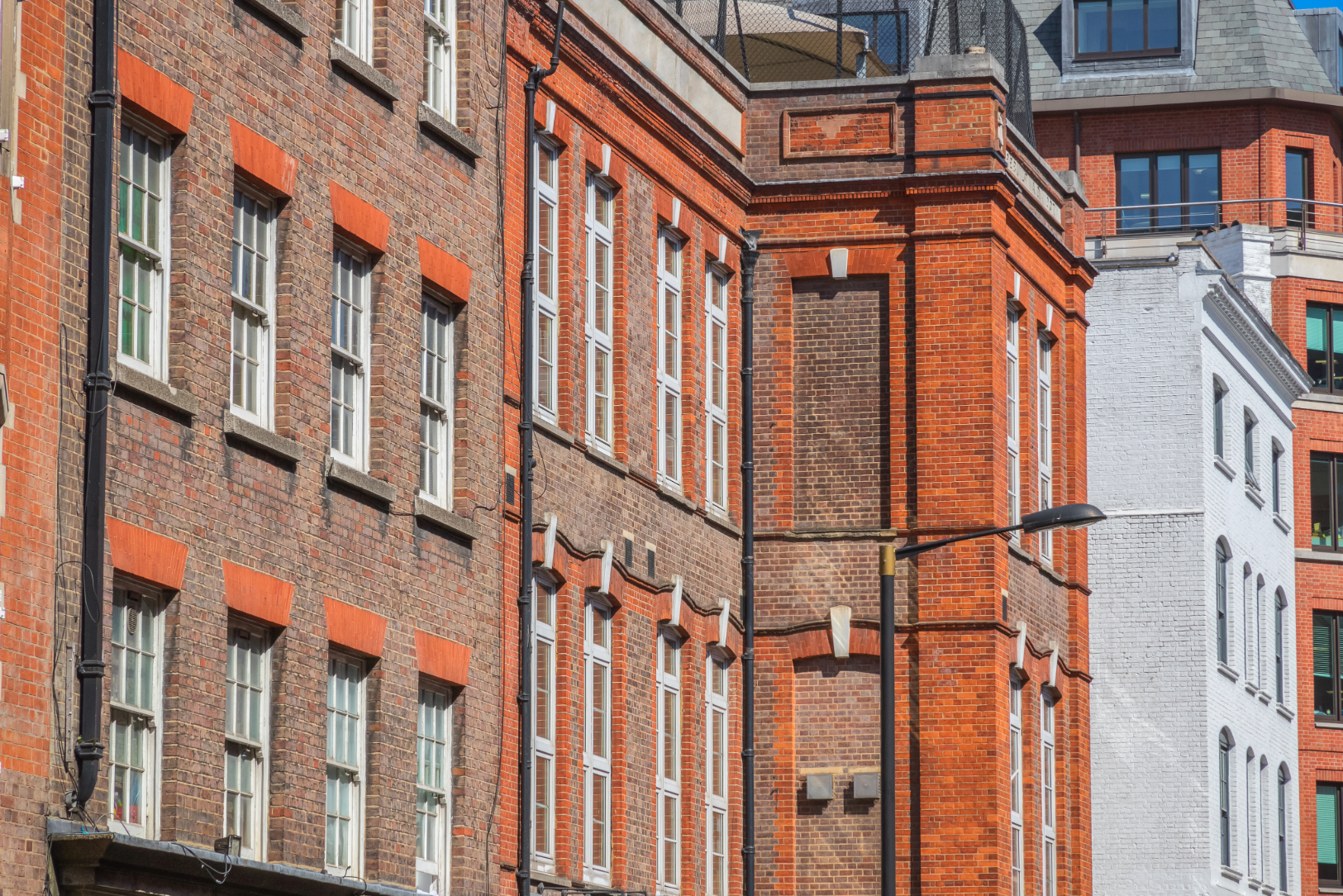
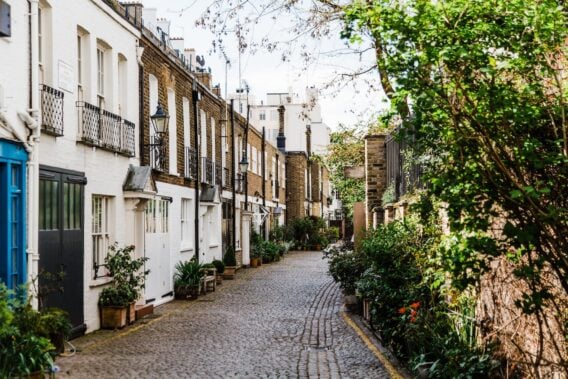
Working with Bell Group, we are supporting St Mungo’s, a homeless charity and supported housing provider, in bringing their geographically dispersed portfolio of around 300 units across Bristol and London up to modern energy efficiency standards under the DESNZ-funded Warm Homes: Social Housing Fund. The mix of self-contained flats, HMOs and hostel-style bedspaces is a materially different occupancy pattern to a standard tenanted housing stock. Most properties are solid wall construction, and a genuinely fabric-first approach is complicated by two compounding factors: many buildings house multiple tenants, ruling out disruptive internal measures as a routine option, and a significant number are Grade II listed or within Conservation Areas, meaning upgrades must satisfy the Planning (Listed Buildings and Conservation Areas) Act 1990 alongside funding requirements.
The Solution
Assessing a Mixed-Tenure, Vulnerable-Occupant Portfolio
Self-contained flats each require their own EPC, while HMOs are assessed under a single EPC covering multiple bedsits. With both housing types sitting side by side across the portfolio – sometimes on the exact same street – we ran two distinct assessment logics in parallel. Given the supported-housing context of the project, we worked in close collaboration with St Mungo’s to ensure enhanced safeguarding protocols were seamlessly built into every single site visit.
Fabric-First Design Within Real-World Constraints
The retrofit design followed a fabric-first hierarchy, in line with St Mungo’s own commitment to fabric-first retrofit under their Sustainability Strategy 2026-2030: prioritising cavity wall insulation where present, reserving internal wall insulation for flats where residents could be temporarily rehoused, and deprioritising external wall insulation. Heating upgrades favoured ground and air source heat pumps over storage heaters wherever feasible.
Rather than designing to the scheme’s minimum funding threshold, we collaborated with Bell Group and St Mungo’s to agree on a higher “safe” target, building in headroom against anticipated EPC methodology reforms. Finally, because a tighter building fabric can trap heat as easily as it keeps it out, south- and west-facing flats without cross-ventilation were evaluated for overheating risk using the Good Home Alliance’s tool. A defined cooling hierarchy addressed this risk directly, ensuring it wasn’t left as an unmanaged side effect of the upgrades.
Heritage-Led Planning Coordination
We are leading the heritage compliance strategy across the portfolio, pursuing Listed Building Consent for four Grade II listed Georgian buildings alongside a wider programme of planning applications across the portfolio’s Conservation Areas.
Each application carries its own bespoke Heritage Impact Statement and an accompanying energy efficiency and airtightness strategy, carefully designed to satisfy modern decarbonisation requirements without compromising the buildings’ protected status. A three-year programme timeline was built in from the outset, ensuring this complex workstream has the necessary room to run without derailing the wider project.
The Outcome (So Far)
The first phase of retrofit measures is now live, lodged with TrustMark, and undergoing post-installation testing to verify on-site performance. By successfully navigating the complex intersection of heritage planning, fabric-first design, and tenant safeguarding, the programme is currently on track to exceed its funding requirements. Modelled improvements across the wider portfolio show a 43.1% reduction in carbon emissions (beating the scheme’s 40% target) and a 45.6% reduction in annual fuel bills (comfortably exceeding the 30% target). As work scales across the remaining properties and the heritage planning workstream progresses in parallel, these upgrades are doing more than just satisfying PAS 2035 compliance – they are actively delivering warmer, more cost-efficient and climate-resilient homes for vulnerable residents.
Client Testimonial
We have worked with BEE on a DESNZ-funded (WHSHF) upgrade of our housing stock, which includes a large number of listed properties and flats in conservation areas within historic areas of London and Bristol. They have consistently been helpful and knowledgeable critical friend throughout our project, assisting us and our framework contractor to negotiate the challenges of heritage assessment, planning consents and PAS2035 requirements. We would happily endorse them.
— Stephen Edwards, Head of Reinvestment and Sustainability, St Mungo’s


