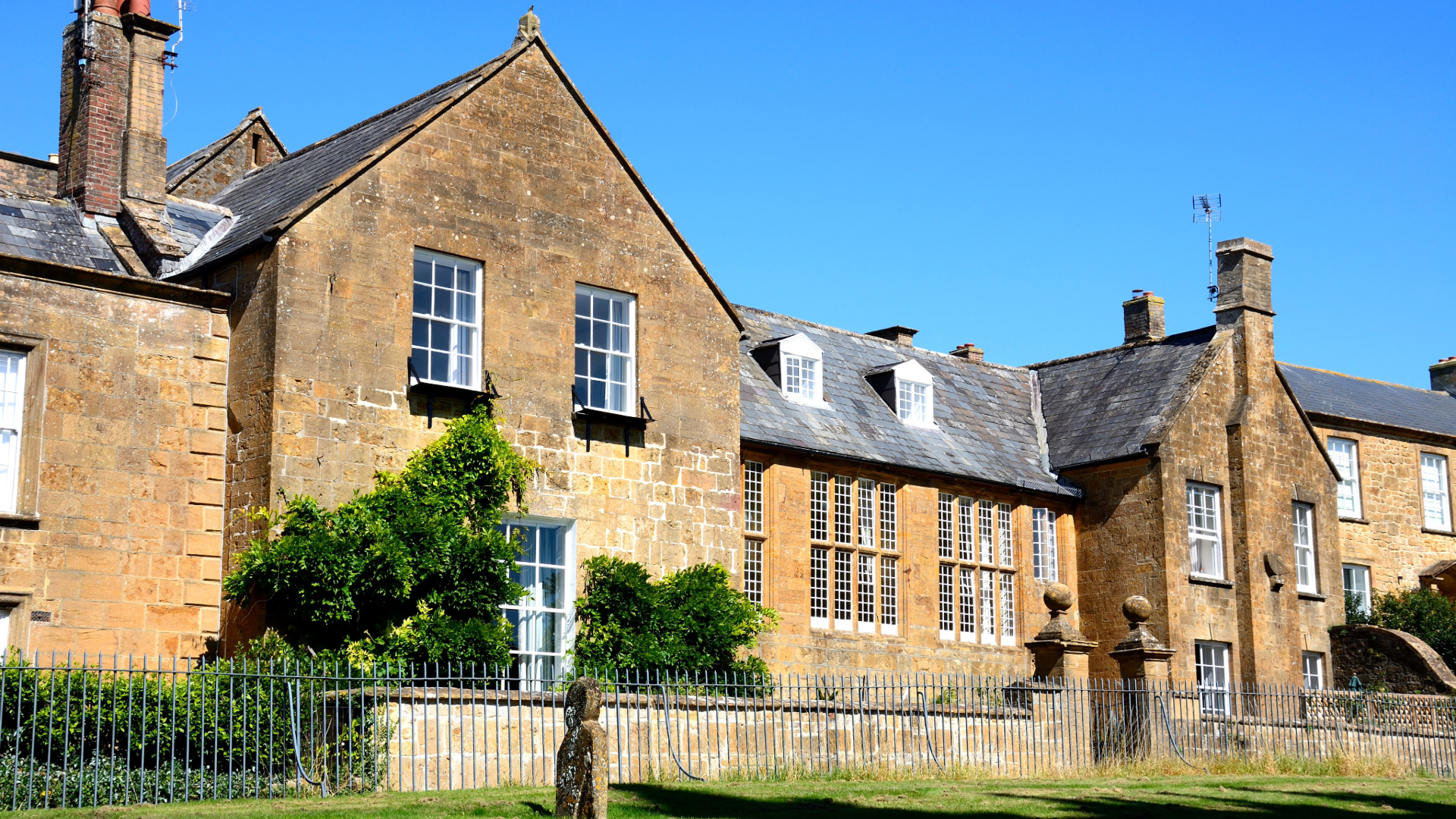
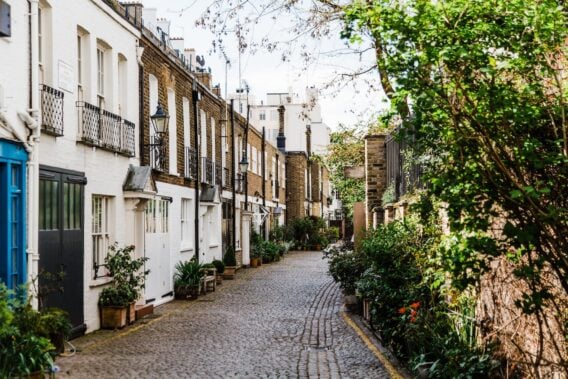
Delivering retrofit assessments and medium-term improvement plans across a diverse portfolio of clergy housing, balancing net zero ambition with heritage sensitivity.
Project Overview
- Client: Diocese of Bath and Wells
- Sector: Charity & Community Organisations | Heritage & Listed Buildings
- Location: Somerset (county-wide)
- Services Provided: PAS 2035 Retrofit Assessments (including heritage impact assessments), Retrofit Coordination
- Scale: 20 clergy dwellings, spanning pre-1900 listed stone buildings to 1950s–60s cavity-wall properties
- Target: Net zero strategy for clergy housing, with EPC A targeted where feasible – aligned with PAS 2035 and heritage best practice
The Challenge
Clergy housing sits outside the regulatory frameworks that govern social housing or the private rented sector – it’s tied accommodation provided as part of clergy employment, not let under a standard tenancy – so there’s no government funding scheme driving this work. The Diocese wanted a clear, deliverable Net Zero strategy for its clergy housing portfolio on its own terms – but the properties themselves varied enormously, from Georgian and Victorian rectories with solid stone walls and single glazing, to more conventional 1950s and 60s vicarages with cavity walls and decent existing fabric. A single target rating applied uniformly across a portfolio like this risked being unrealistic for the oldest buildings and unambitious for the newest. The Diocese needed a plan that was genuinely deliverable property-by-property, not a blanket policy that ignored what each building could actually support.
The Solution
Retrofit Assessment & Medium-Term Improvement Planning
We’re carrying out full retrofit assessments and RdSAP modelling across 20 clergy dwellings, using PAS 2035 as the quality-assurance framework behind the Diocese’s own Net Zero strategy rather than because a funding scheme requires it, and developing medium-term improvement plans specific to each building’s construction and heritage sensitivity. For older, listed properties – solid stone walls, single glazing, no realistic route to external insulation – recommendations centre on internal wall insulation, sensitive glazing upgrades and modest solar PV, sized to what the historic fabric can support without compromising it. For more conventional post-war properties, standard cavity and floor insulation measures, combined with PV, offer a more direct route toward the target rating. Every recommendation is set out clearly enough to be understood by both technical specifiers and non-specialist parish and diocesan staff.
The Outcome (so far)
Assessment and planning work across the portfolio has already given the Diocese an honest, property-specific picture of what its Net Zero ambition means in practice: modern properties can realistically approach the EPC A target, while pre-1900 listed buildings – even with a full package of sensitively-designed measures – may only reach EPC C or D without compromising their historic fabric. That range is the point: rather than a single unachievable target applied uniformly, the Diocese is building a deliverable, building-by-building roadmap toward decarbonising its clergy housing, with each property’s improvement plan reflecting what its specific archetype can genuinely support.
Client Testimonial
The Diocese of Bath and Wells engaged BEE to support the development of its Net Zero strategy for clergy housing. BEE has provided valuable expertise and guidance alongside delivering medium-term, low-carbon plans for each dwelling, aligned with PAS 2035 and established heritage best practices. They demonstrated strong technical knowledge throughout and presented their findings in a clear, accessible format that is usable both by technical experts and non-specialists. In addition, they are a friendly and approachable team, making collaboration straightforward and constructive. This work presents particular challenges for older, listed vicarages, where BEE has shown a strong capability to develop sensitive and carefully considered proposals that respect the historic fabric while enabling sustainable improvements.
— Owain Wynne, Diocesan Surveyor / Property Manager, Diocese of Bath & Wells

